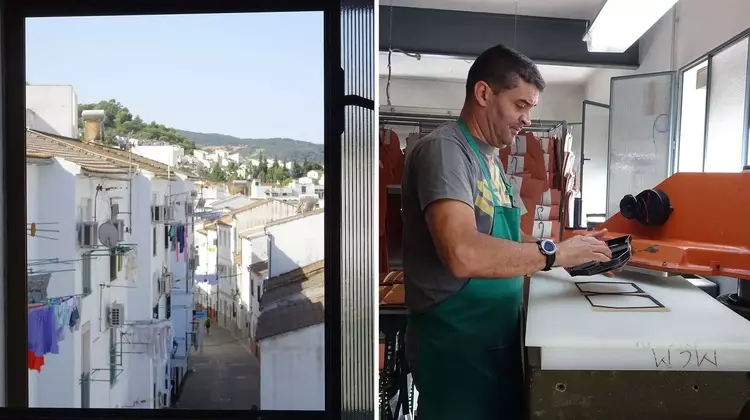
In the heart of Andalusia, Spain, lies Ubrique, a picturesque "white town" that has, for centuries, quietly sustained the world's most exquisite leather craftsmanship. This unassuming village, nestled amidst national parks, is now at a crossroads, its clandestine legacy brought to light by digital tastemakers like Volkan Yilmaz, known online as "Tanner Leatherstein." As global fashion brands increasingly turn to Europe for production, Ubrique faces a critical decision: how to honor its deep-rooted artisanal traditions while navigating the demands of a rapidly evolving, mass-market luxury industry.
Ubrique's Delicate Dance: Preserving Tradition Amidst Modern Demands
The journey into Ubrique's leather heartland was illuminated by Volkan Yilmaz, a TikTok sensation and leather expert born into a Turkish tanning family. His viral videos dissecting luxury handbags, and his subsequent discovery of Ubrique, thrust this Spanish town into the spotlight. Yilmaz's investigation revealed that many high-quality, accessibly priced bags from brands like DeMellier, Polène, Strathberry, and Stow London—the latter of which Yilmaz later joined—were crafted in this very town, challenging the notion that superior materials and artistry demand exorbitant prices.
Ubrique's allure stems from its century-long dedication to high-end leather goods. Historically, major brands have discreetly utilized its workshops, keeping its skilled artisans a well-guarded secret. However, shifting global dynamics—including rising tariffs, geopolitical instability, and calls for greater traceability in supply chains—have made European production increasingly attractive, positioning Ubrique for unprecedented growth. Yet, this newfound attention brings a dilemma: should Ubrique adopt the hyper-efficient, large-scale production models favored by big brands, or should it steadfastly protect the meticulous, slow-paced artisanal techniques that define its identity?
A stroll through Ubrique's charming streets reveals the rhythmic sound of the traditional patacabra, small goat's leg-shaped wooden hammers used by leather workers. This percussive backdrop has been the soundtrack to generations, as families passed down their craft through hands-on learning. Children grew up watching their elders painstakingly create leather pieces, fostering an innate understanding of the material and its manipulation. This intergenerational transfer of knowledge, as Yilmaz points out, is what makes Ubrique's magic almost impossible to replicate elsewhere. While other European craft hubs, such as those in Italy and the UK, struggle to attract younger generations, Ubrique thrives. Its leather industry is a robust economic engine, drawing talent from both within and outside the town. Workers express immense pride in their profession, often collaborating with parents, siblings, and extended family, making it truly a family affair. Despite this, the challenge of an aging skilled workforce remains, as highlighted by Adam Bryer of Stow London, emphasizing the need to transfer invaluable expertise to younger artisans.
To safeguard this legacy, the Escuela de Artesanos de la Piel was founded in 2015, a unique artisan school supported by local businesses. This institution has trained over 600 individuals from across the globe, boasting a 95% employment rate. Juan Enrique Gutiérrez of the Association of Fashion and Leather Companies stresses the school's vital role in preventing the craft's extinction. Beyond preserving tradition, Ubrique also embraces innovation. The Movex technology center, established in 2006, serves as a hub for artisans and brands to collaborate, push boundaries, and incubate fresh ideas, bridging the communication gap between designers and local suppliers.
The influx of large orders, however, has introduced a tension between the traditional, holistic craft approach and the modern, assembly-line production method. While assembly lines boost efficiency for high volumes, they risk diminishing the comprehensive skill set of artisans, who might only learn a single step of the process. Stow London, for instance, has chosen to limit its production to 5,000 bags annually to ensure each piece maintains the meticulous quality its 12 artisans can deliver. In contrast, brands like Strathberry have scaled significantly, employing hundreds of craftspeople and optimizing production for efficiency, allowing them to keep prices competitive despite higher European wages. Yet, even Strathberry acknowledges the strain on Ubrique's capacity, exploring other production sites in Spain to avoid over-burdening the town.
This growth also creates challenges for smaller, local brands. Large orders from international players can monopolize workshop capacity, leaving local businesses struggling to compete. Ismael Menacho Pérez, founder of Crush and inheritor of a long-standing leather supplier family business, emphasizes the need for big brands to ensure quality and craftsmanship are not sacrificed for scale. He also highlights the decline of auxiliary industries within Ubrique, as major brands increasingly rely on external, preferred suppliers. Crush, for its part, aims to support the entire local ecosystem, sourcing materials from nearby Spanish regions and championing the town's rich heritage.
Ubrique's story is a compelling testament to the resilience of heritage crafts in an increasingly fast-paced industry. Its ability to attract young talent to factory roles is particularly remarkable in Europe, where such opportunities are often scarce. However, its success is deeply rooted in generations of specialized knowledge and consistent demand, making it a unique model. As Ubrique gains broader recognition, it faces the double-edged sword of increased visibility: while it celebrates its well-deserved spotlight, it must also manage the growing pressure on its finite resources and capacity, ensuring that its rich legacy of craftsmanship continues to flourish.
The narrative of Ubrique’s leather industry offers profound insights into the challenges and opportunities facing traditional crafts in the modern global economy. It serves as a compelling case study on how a community can balance economic prosperity with cultural preservation. For me, this story emphasizes the enduring value of artisanal skill and the importance of supporting local economies that cherish and cultivate such specialized knowledge. In a world increasingly dominated by mass production, Ubrique reminds us that true luxury often lies in the human touch, the inherited wisdom, and the meticulous care embedded in every handcrafted item. It highlights the urgent need for brands and consumers alike to recognize and invest in the sustainability of these invaluable heritage crafts, ensuring they thrive for future generations.