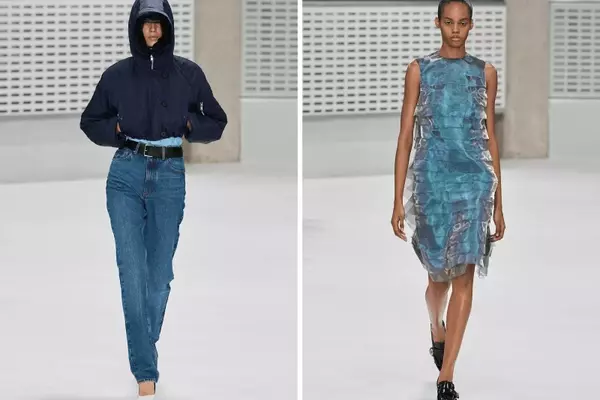
In a bold move that redefines contemporary fashion, Icelandic designer Sól Hansdóttir is spearheading a transformative concept: "hybrid garments." Breaking free from the conventional cycle of seasonal collections, Hansdóttir's vision prioritizes sustainability, accessibility, and personal expression. Her new approach introduces innovative pieces that blur the lines between clothing and accessories, encouraging wearers to creatively integrate them into their existing wardrobes rather than constantly seeking entirely new outfits. This strategic shift not only makes her distinct sculptural designs more attainable for a broader audience, with prices ranging from £80 to £800, but also addresses critical industry concerns regarding environmental impact and overproduction. Hansdóttir, an alumna of Central Saint Martins, views this evolution as the inevitable future of fashion, promising a more inclusive and responsible industry model.
Sól Hansdóttir Pioneers Fashion's Future with Innovative Hybrid Garments
London, UK – Renowned Icelandic designer Sól Hansdóttir, celebrated for her distinctive sculptural creations crafted from deadstock fabrics, is embarking on a pioneering journey to reshape the fashion landscape. Having successfully showcased three comprehensive collections since her graduation in 2021, including a Spring/Summer 2025 debut at Copenhagen Fashion Week and a London Fashion Week presentation last season, Hansdóttir is now pivoting her design philosophy. She is moving away from producing complete ensembles to focus exclusively on what she terms "hybrid garments."
These ingenious new offerings, which sit between traditional clothing and accessories, are designed to enhance and invigorate existing wardrobes. Examples include bamboo jersey neckties that mimic necklaces or scarves, backless pinnies inspired by her signature spiral-cut skirts, and bolero-style tops perfect for elevating a simple T-shirt or dress. This strategic transition makes her unique aesthetic more accessible to a wider demographic, with prices starting from £80 for items like the "naughty pearls" (mesh-covered marble necklaces) and increasing to £250-£500 for mid-range pieces, while more intricate designs such as sequined apron dresses are capped at around £800. This marks a significant departure from her previous price points, which ranged from £800 to £2,500.
Hansdóttir's decision stems from a desire to foster greater engagement with her designs, acknowledging that her earlier, more flamboyant pieces sometimes presented styling challenges for everyday wear. Her ambition is for customers to feel comfortable wearing her creations in any setting, even for mundane tasks like grocery shopping. By prioritizing versatile, single-size or dual-size hybrid garments, she not only promotes inclusivity across various body types but also streamlines production, effectively reducing potential overstock. This forward-thinking approach aligns with a broader industry trend towards more personal expression in dressing and a growing emphasis on sustainable practices. Hansdóttir firmly believes this model represents the "future" of fashion, offering benefits for businesses, consumers, and the environment alike, and she has no intentions of reverting to the traditional collection format.
Sól Hansdóttir's innovative vision presents a compelling blueprint for the future of fashion. Her pivot to hybrid garments is more than a design choice; it's a strategic embrace of sustainability, accessibility, and individual empowerment in an industry ripe for change. This approach challenges the ingrained consumerist cycle of constant novelty, instead championing mindful consumption and creative reuse. It prompts us to consider how designers can lead by example, proving that high fashion doesn't have to be exclusionary or environmentally taxing. Her philosophy resonates deeply with a growing global consciousness, signaling a shift toward a more responsible and democratic fashion ecosystem where personal style and planetary well-being are interwoven.