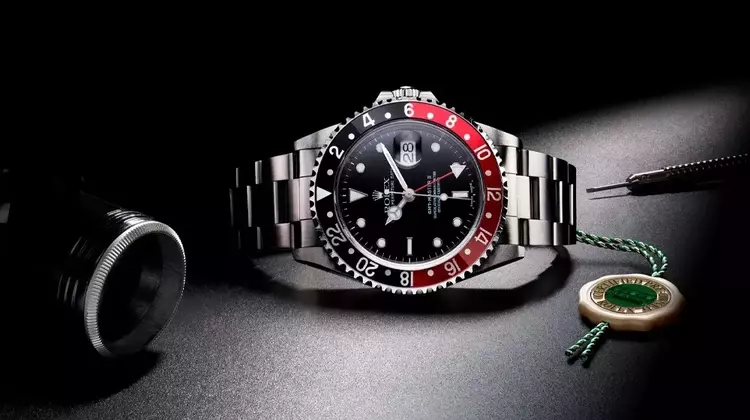
Rolex's Certified Pre-Owned (RCPO) program, launched in late 2022, has demonstrated impressive growth and market acceptance, contradicting initial industry skepticism. The program recorded a remarkable 101% increase in sales during the first half of 2026 compared to the previous year, reaching a total of $385 million. This success is primarily attributed to heightened consumer confidence in purchasing pre-owned luxury watches that come with official certification and warranty. Dealers like the 1916 Company have observed a strong demand for older, out-of-production models, as these offer unique historical value and are no longer available in the primary market. The RCPO program fills a critical gap for collectors seeking authenticity and assurance in the secondary market, despite a premium price tag for the certification.
While the RCPO program has undeniably strengthened Rolex's position in the secondary market, broader trends indicate a calming of the overall pre-owned watch market. Although Rolex remains a dominant leader, its transaction share has decreased from its pandemic-era peak, with younger buyers diversifying their interests across other luxury brands like Cartier and Patek Philippe. The market is shifting from speculative sports models to more classic and dressier timepieces, and prices have stabilized to about 55% above 2019 levels. This suggests a more mature and diversified market, where buyers prioritize trusted sources and long-term value, reinforcing the importance of certified pre-owned options like those offered by Rolex.
The Ascent of Rolex's Certified Pre-Owned Market
Rolex's Certified Pre-Owned (RCPO) initiative, introduced in late 2022, has defied initial market uncertainty to achieve remarkable success. The program reported an extraordinary 101% surge in sales during the first six months of 2026, amassing $385 million. This substantial growth underscores a significant shift in consumer behavior, indicating a rising trust and preference for officially certified pre-owned luxury timepieces. Experts initially debated the program's viability, with some foreseeing struggles due to fierce competition in the secondary market. However, the program's commitment to authenticity, coupled with a robust warranty and comprehensive servicing, has resonated positively with buyers. Authorized dealers, such as the 1916 Company, have noted a particular interest in vintage and discontinued Rolex models, as these watches offer unique appeal and historical significance that are unavailable through traditional retail channels. The RCPO program effectively addresses the demand for verified luxury watches, making it a pivotal force in the evolving pre-owned market.
The RCPO program's success is largely driven by its ability to provide unparalleled assurance to consumers. John Shmerler, CEO of the 1916 Company, highlights that the program has significantly increased consumer acceptance of pre-owned watches, especially for models that are no longer in current production. Collectors are increasingly seeking specific "birth year" watches or iconic models like the Submariner that are out of manufacture. The certification process, which includes restoration at Rolex’s Atelier and a full warranty, instills confidence that was previously lacking in the uncertified secondary market. This allows buyers to acquire rare pieces, such as fully restored vintage chronographs, with the full backing and approval of Rolex. Despite a premium of 12.6% to 31.9% compared to non-certified watches, this added value and peace of mind prove to be a compelling factor for many, attracting both new buyers and seasoned collectors who value the guarantee of authenticity and quality offered by the RCPO program.
Shifting Dynamics in the Broader Pre-Owned Watch Sector
While Rolex's certified pre-owned sector is flourishing, the broader luxury watch market is undergoing a period of recalibration. Despite Rolex's continued leadership, accounting for 30.5% of all pre-owned transactions on platforms like Chrono24, this figure represents a decrease from its peak during the pandemic era (44.1%) and a return to pre-2019 levels. This shift suggests a diversification of consumer interest beyond Rolex, with buyers exploring other esteemed brands. Younger demographics, particularly those under 30, who were major drivers of the pandemic-era boom, have reduced their exclusive focus on Rolex. They are now allocating their luxury watch budgets across a wider array of brands, including Cartier and Patek Philippe, and showing a preference for classic, dressier styles over the more speculative sports models that dominated recent trends. This change indicates a maturing market where consumers are becoming more discerning and less driven by hype.
Balazs Ferenczi, head of brand engagement at Chrono24, notes that the overall market for pre-owned watches has stabilized, with prices firming up over the past year and remaining about 55% higher than in 2019. The market's current state is characterized by a broader distribution of money across multiple brands, moving away from the intense speculation seen during the boom years. Buyers are increasingly gravitating towards enduring pieces like the Datejust, rather than purely investment-driven sports models. Although the intense "hype" surrounding certain models has subsided, Rolex's fundamental strength and position as an industry benchmark remain unchallenged. The stability and diversification within the pre-owned market highlight a more balanced ecosystem where quality, authenticity, and verified provenance, as offered by programs like RCPO, play an increasingly crucial role in influencing purchasing decisions and sustaining long-term value.