Unveiling the Craftsmanship: A Deep Dive into Casio's Japanese Manufacturing Excellence
Navigating Nature's Fury: The Unexpected Start to a Japanese Adventure
My inaugural trip to Japan unexpectedly began with a typhoon. As my plane landed in Tokyo in June, marking the start of Japan's rainy season, my phone buzzed with warnings of severe winds and torrential rain for the next day. This meant my planned visit to Casio Yamagata had to be postponed due to Tropical Storm Jangmi, as bullet train services were suspended.
From Tokyo's Heart to Yamagata's Charm: A Journey Resumed
After a day of heavy rainfall and enjoying numerous bowls of ramen in Tokyo Station, the storm cleared, allowing me to finally embark on my journey to Yamagata Prefecture. Approximately four hundred kilometers north of Tokyo, the city of Higashine is home to Casio's "mother factory," aptly named Yamagata Casio. While a significant portion of Casio's production is handled overseas, this facility is the hub for all "Made in Japan" watches.
Contrasting Landscapes: Casio's Industrial Hub Amidst Fruit Orchards
The industrial complex of Casio stands in stark contrast to Higashine's primary claim to fame: fruit. Stepping off the bullet train at Higashine Sakuranbo station, visitors are greeted by an abundance of fruit trees and advertisements for local specialties, especially cherries, as Higashine is the nation's leading producer. In true Japanese fashion, the region boasts an adorable mascot, Tanto-Kun, an anthropomorphic pear with cherry-themed accessories.
A Glimpse into Casio's Heritage and Exclusive Offerings
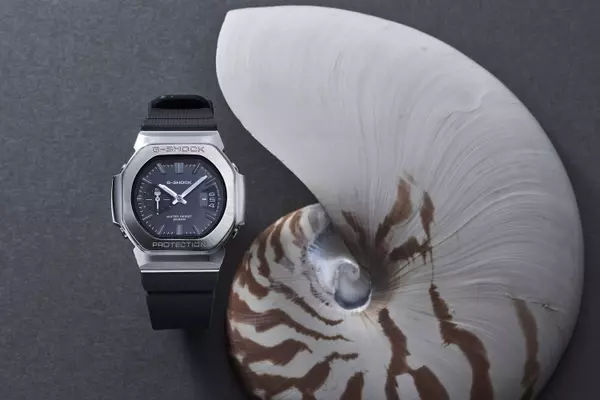
The Yamagata Casio factory is not open to the general public, but corporate visitors, retailers, and media are welcomed into a museum area that chronicles the brand's history. This space proudly displays both iconic and unique watches produced by Casio over the years. Interestingly, the factory also offers two exclusive G-Shock models, a standard 5600 with a unique Yamagata Casio logo on the strap, a souvenir I now regret not purchasing.
The "Blue Rose Project" and Factory Insights
A significant part of my visit was dedicated to a confidential preview of the "Blue Rose Project," which later launched as an exclusive 20-piece, $80,000 blue sapphire G-Shock. My day also included extensive tours of the factory, covering everything from quartz movement manufacturing to injection molding and Casio's Premium Production Line.
Exploring the Yamagata Casio Manufacturing Facility
The Dedicated Watchmaking Hub: "Building G"
Watchmaking at Yamagata Casio primarily takes place in "Building G," established in 2018. This building is exclusively dedicated to watch production, although other Casio products like calculators and musical instruments are manufactured elsewhere on the vast site. Unlike traditional watchmaking, Casio's production is highly industrialized, relying on advanced machinery rather than individual watchmakers.
Precision Movement Manufacturing on a Seismically Isolated Floor
Given Japan's seismic activity, much of the heavy machinery in the movement production area is installed on a specialized floor that employs a seismic isolation system. This ingenious design allows the floor to move in multiple directions during an earthquake, absorbing ground tremors and ensuring the stability of the machinery. It's a fitting detail for a factory that builds robust G-Shock watches.
The Molding Department: Where Resilience Takes Shape
Injection molding is a core process in Casio's manufacturing, especially for G-Shock's signature resin components. While the molding itself is automated, a dedicated team of technicians and engineers is responsible for translating designs into physical molds using custom tooling. This department also handles extensive maintenance, ensuring continuous operation.
Crafting Dials at Yamagata Casio: From Resin to Metallic Finish
Casio utilizes a variety of industrial processes for dial manufacturing, depending on the watch collection and specific design requirements. Surprisingly, many dials and indices, even those appearing metallic, are injection-molded from resin. This includes intricate designs like the lattice-work dial of the MRGB-2100, which is engineered to facilitate solar charging.
Advanced Finishing Techniques: The Art of PVD Coating
To achieve the metallic aesthetics on many of its dials, Casio employs multiple PVD (Physical Vapor Deposition) coatings. The Yamagata Casio team takes immense pride in its PVD capabilities, which are evident in the diverse and colorful designs seen across their watch lineup.
Nano-Precision in Dial-Making: A Testament to Meticulous Engineering
For its most intricate dials, characterized by sharp facets and minute patterns, Casio leverages ultra-precise 5-axis CNC machines capable of processing shapes with nanometer accuracy. These machines operate in highly isolated environments within the factory, where factors like vibrations and temperature are meticulously controlled to ensure optimal precision. Due to the extreme precision involved, this process is reserved for components requiring the highest level of detail.
The Premium Production Line: Pinnacle of Casio Craftsmanship
The Premium Production Line is a highlight for any G-Shock enthusiast. This facility is where all high-end Casio and G-Shock watches, including the revered MR-G line and flagship Oceanus models, undergo hand assembly and final inspection. These watches embody a blend of traditional hand-finishing and modern manufacturing precision.
Expertise and Rigor: Casio's Certification System for Artisans
The Premium Production Line is staffed by a highly skilled team, operating under Casio's stringent five-tier qualification system, culminating in the "Meister" designation. Achieving a Gold Medal or higher in yearly examinations is a prerequisite for working on this line. During my visit, the team was meticulously inspecting Gravitymaster watches, showcasing the rigorous quality control applied even to watches retailing for under a thousand dollars.
The Essence of "Made in Japan" at Casio
Casio, primarily an electronics manufacturer, occupies a unique position in the watchmaking world. While traditional watchmaker titles or mechanical components like balance wheels are absent, the brand produces some of the most iconic timepieces globally. The G-Shock, invented by Kikuo Ibe in the 1980s, has profoundly influenced popular culture and achieved unparalleled mass adoption, making watches Casio's largest business segment today.
Although millions of Casio watches are produced worldwide, Yamagata Casio stands as the brand's crowning achievement. The "Made in Japan" designation on a G-Shock caseback holds significant value and a dedicated following among enthusiasts. My brief visit to Yamagata, despite the initial typhoon scare, was a fulfilling experience, adding a cherished checkmark to my horological bucket list.