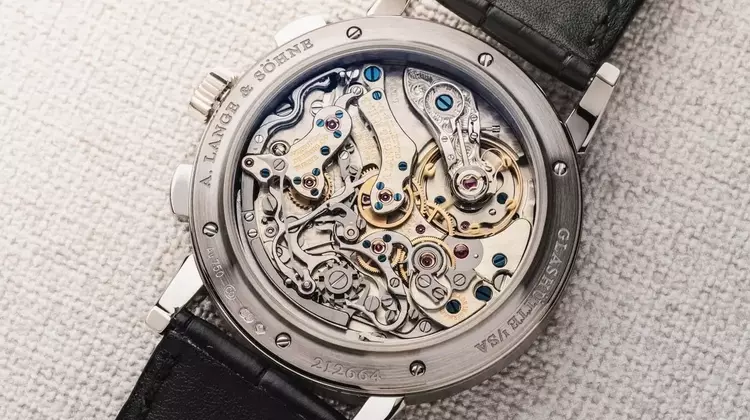
The seemingly minor detail of a watch's case back holds surprising weight in the world of horology, often influencing a collector's perception of a timepiece. While frequently hidden against the wrist, the reverse side of a watch can present an entirely different facet of its design philosophy. For some, the intricate dance of a finely finished mechanical movement, visible through a sapphire crystal display, represents the pinnacle of watch ownership. Conversely, many purists argue that a solid case back is the only fitting choice, particularly for robust tool watches, emphasizing function and durability over exhibition.
Recently, a panel of experts from Fratello, including Nacho, Timo, and RJ, engaged in a lively discussion on this very topic. Their conversation centered on the merits and drawbacks of display case backs, pondering when these transparent windows genuinely enrich a watch's character and when they might, inadvertently, diminish it. This exploration highlights the nuanced considerations that go into watch design and the diverse preferences within the collecting community, affirming that even the smallest components can spark considerable debate and passion among enthusiasts.
During their 'wrist check' segment, each host showcased a timepiece that exemplified their personal preferences regarding case backs. Timo sported his Omega Speedmaster in Moonshine Gold, a luxurious iteration featuring a dark green dial. This piece, with its elegant yellow-gold alloy and rich hue, represents a modern take on a classic chronograph, offering a blend of opulence and precision. RJ opted for a vintage Omega Speedmaster reference 145.012 from 1967, a significant model as it was one of the last to house the esteemed caliber 321 before the brand transitioned to the 145.022 and its caliber 861. Nacho, on the other hand, chose his Tudor Pelagos FXD, paired with a dark grey Sigma Straps Cinch. This combination gave his titanium dive watch a more subdued appearance while preserving its inherently utilitarian appeal, demonstrating how strap choices can further influence a watch's overall aesthetic and perceived function.
The discussion underscored that while display case backs have gained widespread popularity, their appropriateness is not universal. In certain instances, revealing the movement through a transparent back can indeed elevate the ownership experience, allowing enthusiasts to admire the mechanical artistry within. However, there are times when a solid case back is simply a more logical choice, whether for reasons of historical accuracy, robust functionality, or a cleaner aesthetic. The trio's insights revealed that this seemingly minor design element can profoundly shape one's emotional connection to a watch. They invited their audience, the 'Fratelli' community, to share their own perspectives on whether they favor a visible movement or prefer it to remain concealed.
Ultimately, the choice between a display or solid case back boils down to personal taste and the specific context of the watch. Whether it's the visual delight of a meticulously crafted caliber or the rugged simplicity of a solid metal shield, the case back remains a pivotal feature that contributes significantly to a watch's identity and its appeal to collectors.