The reappearance of the Gallet brand, supported by Breitling's House of Brands, marks a significant moment for the mid-priced watch sector. This initiative suggests a potential shift in the Swiss watch industry's strategy, which has predominantly focused on luxury segments in recent years. By offering watches at competitive price points, Gallet is poised to challenge the dominance of boutique and micro-brands that have thrived in this underserved market, driven by consumer demand for value amidst rising inflation.
Gallet's Strategic Re-entry and Market Dynamics
On September 29, 2026, a pivotal moment unfolded in the Swiss watch industry with the official relaunch of the Gallet brand. This strategic reintroduction, spearheaded by Breitling's House of Brands, signals a determined effort to reclaim the mid-tier watch market, a segment that has seen traditional Swiss manufacturers gradually cede ground to independent and micro-brands. The new Gallet collection, boasting price points ranging from approximately $2,900 for a Flying Officer model with date functionality to around $6,700 for vintage-inspired 'Classics' equipped with Breitling B09 hand-wound calibers, demonstrates an assertive pricing strategy designed to appeal to a broad consumer base.
This move is particularly noteworthy given the prevailing trend among Swiss watch brands to escalate prices and narrow their production to fewer, more exclusive timepieces. In the past, the premium mid-tier segment, encompassing luxury watches priced between $2,000 and $5,000, was a stronghold for renowned Swiss marques such as Omega, Breitling, TAG Heuer, and Jaeger-LeCoultre. However, as many of these brands shifted their focus towards higher price categories, a void emerged, which smaller, agile brands successfully filled. This phenomenon has left a substantial market segment open for re-entry, and Gallet, with the formidable backing of Breitling, is positioning itself to capitalize on this opportunity.
Toby Sutton, a notable vintage watch dealer from the U.K. and the visionary behind the revived Dennison brand, underscores the significance of Gallet's return. He highlights the vast market segment neglected by major Swiss watch brands, making Gallet's endeavor to re-establish a presence here particularly intriguing. George Kern, CEO of Breitling's House of Brands, emphasizes that Gallet will draw extensively on Breitling's robust infrastructure, including its manufacturing capabilities, extensive experience, and economies of scale. This strategic synergy is designed to empower Gallet to effectively compete and capture market share in a category that Breitling itself no longer actively targets. Crucially, all Gallet timepieces will feature an engraving stating "Manufactured By Breitling" on their casebacks, and the brand will be distributed through roughly half of Breitling's global retail network, leveraging its established reputation and reach. Kern explicitly states that such a relaunch would be inconceivable without Breitling's integral support.
In stark contrast to the upscale relaunch of Universal Genève, another brand under Breitling's House of Brands, Gallet's strategy is oriented towards a more accessible price range. While Universal Genève's new models, albeit lauded for their quality, debuted at prices exceeding $15,000, adhering to the industry's luxury trajectory, Gallet aims for broader appeal. This divergence suggests a conscious effort by the House of Brands to cater to different market segments. Niels Eggerding, CEO of Frederique Constant, observes that his brand, positioned even below Gallet's aggressive pricing, has experienced double-digit sales growth. This success is attributed to a growing demand in emerging economies like India and Mexico for premium watches, coupled with a renewed focus on value in more mature markets such as Europe and the U.S. Frederique Constant, supported by its parent company Citizen of Japan, maintains cost efficiency through a vast manufacturing network and streamlined production processes.
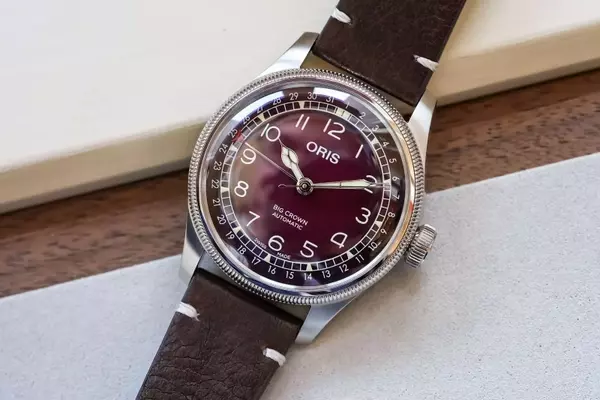
Simultaneously, Frederique Constant is dedicated to enhancing the quality and design of its offerings, exemplified by its updated Worldtimer, priced around $6,000. This competitive approach is vital in a market shared with historical Swiss brands like Longines, a Swatch Group entity. Longines has seen considerable sales growth in markets like the U.S. and the U.K., driven by new releases including a monopusher chronograph under $4,000 and a Pilot Flyback Chronograph at approximately $5,500. Eggerding expresses his intent to aggressively compete by offering exceptional value, directly challenging the formidable presence of brands like Longines. Independent Swiss brand Oris, a long-standing leader in this category, also attests to the strong demand for its more affordably priced novelties, such as the Star Edition and Big Crown Pointer Date "Bullseye," both priced around $2,300, with demand frequently surpassing supply. Oris CEO Rolf Studer emphasizes that maintaining significant sales volumes is crucial for the long-term viability of the Swiss watch industry, advocating for the production of high-quality, popular watches within the mid-level price segment. He warns against pricing Swiss mechanical watches out of reach, which could have detrimental effects on the entire sector.
The relaunch of Gallet, therefore, represents a calculated endeavor to address the growing consumer desire for quality Swiss-made watches at reasonable prices. By leveraging Breitling's resources and focusing on commercial appeal rather than solely on enthusiast niches, Gallet is testing the waters for whether the Swiss watch industry can effectively re-engage with the mid-tier market. The success of this new venture will provide valuable insights into the future trajectory of the Swiss watch sector, particularly regarding its ability to balance luxury aspirations with market accessibility.
The re-emergence of Gallet, backed by the industrial might of Breitling, signifies a crucial inflection point for the Swiss watch industry. It's a bold acknowledgement that a significant portion of the market, hungry for quality and value, has been overlooked. This strategic pivot towards the mid-tier, if successful, could redefine how traditional brands engage with a broader consumer base, fostering greater accessibility and sustainability for Swiss watchmaking in an evolving global landscape.