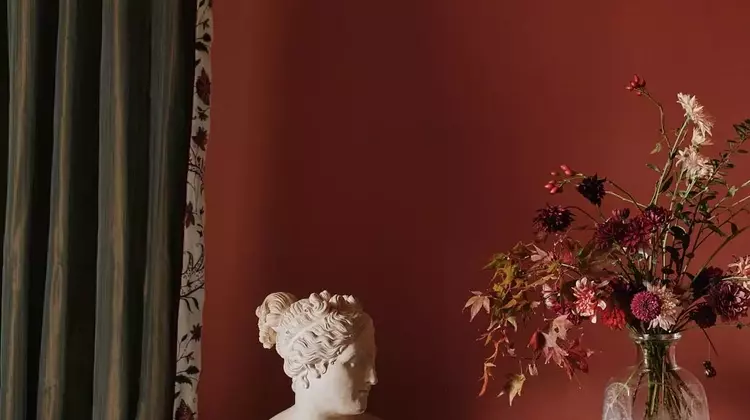
The enduring allure of ancient Greece, rekindled by contemporary cultural phenomena, continues to profoundly influence modern interior design. This pervasive classical legacy, characterized by its emphasis on harmony, proportion, and aesthetic beauty, offers a rich wellspring of inspiration for those seeking to imbue their homes with a sense of timeless elegance. Leading interior designers, including Max Rollitt, Rachel Chudley, Nicholas Hodson-Taylor, and Paddy O'Donnell, advocate for a nuanced approach, suggesting that a successful integration of Hellenic elements involves both reverence for historical principles and a willingness to playfully subvert them.
Details of Infusing Hellenic Spirit into Modern Spaces
As the influence of antiquity surges, particularly with the recent cinematic success of Christopher Nolan's adaptation of The Odyssey, the ancient world's profound design heritage is experiencing a renewed appreciation within interior aesthetics. Designers like Max Rollitt, known for seamlessly blending classical references with contemporary comforts, highlight the timeless appeal of features such as carved friezes, detailed moldings, and painted cornices. He notes the inherent modularity of Greek patterns, whose rhythmic repetition fosters an atmosphere of tranquility and order.
A notable example of this influence is Villa Kerylos, a stunning early 20th-century Greco-Roman inspired estate, which serves as a perpetual muse for architectural interior designer Nicholas Hodson-Taylor. Its intricate, almost Art Deco-influenced classical architecture and ornamentation provide a wealth of ideas for incorporating a Hellenic essence into living spaces. Hodson-Taylor points out how the villa's layers of stylized decoration offer boundless inspiration.
However, designers advise against a rigidly literal interpretation of classical styles. Rollitt emphasizes that while one should respect the ancient order, a touch of "disruption" or rule-breaking is essential to create truly engaging interiors. This philosophy encourages a creative and personal approach to incorporating historical elements.
One of the most recognizable classical motifs, the Greek key border, offers a versatile way to introduce ancient charm. Designer Rachel Chudley, in an East London project, utilized hand-printed Greek key wallpaper borders from the Adelphi Paper Hangings Company around living room architraves, remarking on the special feel they impart. This subtle yet impactful pattern isn't limited to walls; it can elegantly adorn upholstery, curtains, or even serve as a mosaic border in smaller areas like powder rooms or hallways, adding historical depth without overpowering the space.
Another accessible method for embracing classicism involves imaginative paint techniques. Paddy O’Donnell, global brand ambassador at Farrow & Ball, humorously recounts painting a trompe l’oeil broken pediment above a doorway in his 1930s home. This creative application of painted architectural details can instantly infuse character and an illusion of grandeur into otherwise unassuming rooms, demonstrating that classical beauty is achievable regardless of the dwelling's scale. O'Donnell advocates for spontaneity and a lighthearted approach to such decorative endeavors.
Limewashed walls present a beautiful way to achieve an aged patina, reminiscent of ancient limestone. O'Donnell suggests soft, earthy tones like Farrow & Ball's Skimming Stone or Bauwerk's Still to create depth and character without relying on patterns. For highlighting plaster casts and classical details, he recommends Farrow & Ball's Setting Plaster as an ideal backdrop, providing a "heavenly" canvas.
Plaster busts, reliefs, columns, and plinths are powerful evocations of the ancient world. Rollitt notes that these sculptural elements, whether elaborate marble or more accessible plaster, add an elevating, academic, and deeply human dimension to any room. Rachel Chudley creatively arranged miniature Parthenon frieze casts around her front door, transforming an ordinary space into something captivating and whimsical. She also incorporates Joe Sweeney's deliberately unconventional Grecian columns for their playful, kitsch appeal. O'Donnell, too, enjoys filling his bathroom with plaster casts, including a Hercules head, emphasizing the romantic yet lighthearted approach needed to avoid overly themed decor. To maintain balance, Rollitt advises pairing classical pieces with furniture from diverse periods.
For those seeking these classical accents, London's Stoned & Plastered, with its affordable offerings, comes highly recommended by Chudley. Pentreath & Hall, antique fairs, and online platforms like eBay also serve as excellent hunting grounds for unique finds.
Contemporary artists are also reinterpreting classical forms. Sergio Roger and Vicky Lindo & Bill Brookes offer fresh, modern takes on ancient aesthetics, while Jess Wheeler crafts exquisite plaster wall lights inspired by Greek Orthodox churches and the simple beauty of shells found on Greek beaches. These pieces provide both practical illumination and artistic flair.
Mosaics, though labor-intensive, create an unparalleled visual impact. Nicholas Hodson-Taylor is drawing inspiration from Villa Kerylos's hand-cut mosaics for a New York townhouse, aiming to introduce warmth and a touch of tasteful imperfection with bands of terracotta, ivory, and fleshy pink. For more budget-conscious projects, Chudley's team devised a clever method for a child's bathroom: cutting spaces into terrazzo tiles for inlaid mosaics, creating intricate designs like swimming fish without covering the entire floor. These techniques demonstrate how mosaics can bring grandeur, texture, and detail to spaces, as exemplified by Max Rollitt's use of a mosaic floor in a Massachusetts Gilded Age mansion's entrance hall.
In observing the resurgence of ancient Greek influences in modern interior design, it becomes clear that true creativity lies not in mere imitation, but in thoughtful reinterpretation. The insights from these esteemed designers underscore a profound truth: the principles of beauty, proportion, and harmony are universal and timeless. By judiciously selecting elements like Greek key patterns, textured limewash, sculptural busts, and intricate mosaics, one can transform an ordinary dwelling into a sanctuary that resonates with historical depth and contemporary flair. This approach encourages homeowners to view their living spaces as canvases for personal expression, where the past enriches the present, fostering environments that are both visually stunning and emotionally resonant. Ultimately, the lesson is to draw inspiration from history's grandeur while trusting one's own aesthetic instincts to create something truly unique and personal.