A New Era for Britain: Driving Growth and Community Spirit
The Premier's Initial Actions: A Glimpse into a Transformative Agenda
In his first nine days at the helm, UK Prime Minister Andy Burnham has embarked on an ambitious journey, outlining bold plans that signal a significant shift in national policy. His proposals range from fostering regional economic growth through decentralized investment in manufacturing and small enterprises to spearheading a revitalization of local shopping districts. These preliminary announcements, coupled with his decision to establish a new Downing Street office in the North of England, have resonated deeply with a British fashion and retail industry eager for positive change and robust support.
The Urgent Need for Revival: A Deep Dive into Economic Challenges
The urgency of Burnham's proposed reforms is underscored by recent data highlighting the precarious state of British commerce. In 2025 alone, the British Independent Retail Association reported the closure of 17,000 shops on high streets, resulting in substantial job losses and a doubling of business rates since 2024. Concurrently, the Institute of Public Policy Research North revealed a staggering £450 million funding disparity in arts and culture between the North and South, further emphasizing the need for comprehensive regional development and economic rebalancing.
Style as a Statement: Decoding the 'Andycore' Phenomenon
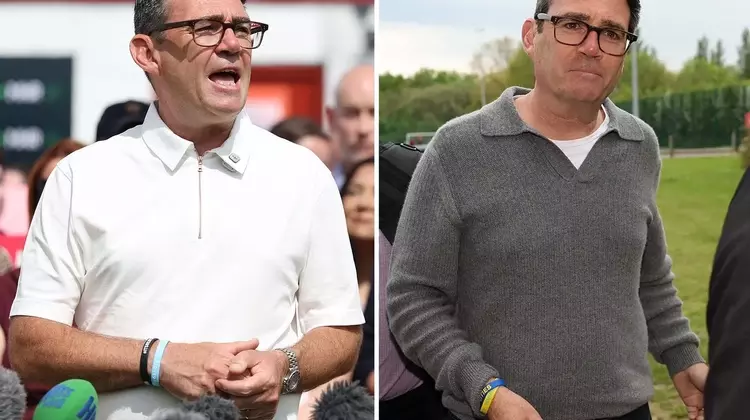
Beyond his policy pronouncements, Prime Minister Burnham's personal sartorial choices have garnered considerable media attention, evolving into what fashion critics have dubbed 'Andycore,' 'Manchester clothes,' or 'hipster dad clothes.' Vanessa Friedman of The New York Times suggests that this seemingly casual aesthetic is a deliberate and calculated strategy to align his image with his political message, particularly his endorsement of Manchester-made brands like Private White V.C. This intentional use of clothing as a communicative tool raises an important question: will his pronounced sense of style translate into a robust and sustained commitment to advancing the British fashion and retail industries?
A Call to Action: Industry Leaders Advocate for Systemic Change
Recognizing the profound impact of fashion on national identity and economic prosperity, David Pemsel, Chair of the British Fashion Council (BFC), penned an open letter to Prime Minister Burnham. Pemsel highlighted the industry's significant contribution of £67.5 billion in gross value added, emphasizing its role in generating employment, driving exports, and attracting investment across the UK. His appeal reflects a broader sentiment among industry experts who are now actively seeking the Prime Minister's attention, advocating for policy adjustments and increased financial support to ensure the sustained growth and flourishing of British fashion businesses.
Reimagining Retail: Burnham's High Street Vision
Just days into his premiership, Andy Burnham initiated a significant policy change, reducing business rates for various establishments including music venues, pubs, and hospitality businesses. This move is part of his overarching strategy to stimulate economic growth across all regions of the UK. However, experts are quick to point out that fashion retailers, which are equally vital to the vibrancy of British towns and cities, have yet to receive the targeted support needed for their survival and growth.
A Champion for Local Commerce: Expert Perspectives on Revitalization
Retail consultant Mary Portas, a long-standing advocate for high street regeneration since her 2011 Portas Review, closely monitors Burnham's speeches. While acknowledging his populist appeal, she emphasizes the monumental task ahead. Burnham's aspiration to make high streets a "new symbol of Britain's renaissance" echoes Portas's vision for lively, community-driven spaces reminiscent of their thriving past. This shared ambition highlights the potential for a transformative approach to urban retail.
Addressing Disparities: Fashion Retailers' Urgent Needs
Andrew Goodacre, CEO of the British Independent Retailers Association, underscores the unique challenges faced by independent fashion and lifestyle retailers, noting their disproportionate struggle compared to other sectors. He advocates for a comprehensive British business plan that extends beyond hospitality to include the fashion industry. Goodacre calls for immediate business rates reform and stricter regulation of low-value imports, which he argues flood the market with cheap fashion that bypasses fair taxation, hindering the growth of local businesses.
Strategic Revival: The Retail Manifesto for a Brighter Future
The British Retail Consortium (BRC) further highlights the severity of the retail crisis, citing the loss of 400,000 jobs over the last decade. Tom Holder, a spokesperson for the BRC, references their Retail Manifesto for 2026, which outlines ten crucial steps to rejuvenate high streets. Key proposals include reducing youth employment costs, reforming employment rights, and overhauling business rates. Holder stresses the immediate need to address escalating electricity costs and the importance of fostering a diverse retail landscape that embraces both independent businesses and larger chains.
Empowering Independents: A Vision for Community-Driven Shopping
Mary Portas posits that the future of high streets lies in independent businesses, not large chains. Her agency's report, conducted with Snapchat, revealed that 51% of Gen Z consumers prefer the physical shopping experience over instant online purchases. Portas envisions a revival of dynamic marketplaces, akin to the 1980s Hyper Hyper, where small brands can flourish. She believes that by fostering creative and unique retail environments, communities can attract customers seeking individuality and connection, moving away from mass-produced labels.
Shifting the Fashion Paradigm: Empowering Regional Talent
Burnham's emphasis on business decentralization aligns seamlessly with the objectives of the British Fashion Council (BFC) under CEO Laura Weir. Weir, appointed last year, has already initiated several nationwide fashion initiatives aimed at inclusivity. She asserts that British fashion, a significant cultural export, has been overly concentrated, and advocates for a broader reach to inspire ambition across the UK, ensuring that talent can thrive regardless of geographical location. Designers like Matty Bovan, who successfully operates internationally from Yorkshire, exemplify the potential of regional bases.
Fostering Local Expertise: Nurturing a National Talent Pool
The decentralization movement offers significant advantages, enabling designers to establish more affordable studios outside the capital. This shift also encourages greater representation and inclusion for young people nationwide within the British fashion industry. By expanding opportunities beyond London, the initiative aims to cultivate a diverse and robust talent pipeline, strengthening the industry's foundations across the entire country.
Retail's Endorsement: John Lewis's Commitment to Regional Design
Peter Ruis, Managing Director of John Lewis, expresses strong support for Prime Minister Burnham's vision of high street revitalization. He views John Lewis stores as more than mere transaction hubs; they are vital social and economic anchors that generate footfall, create local employment, and foster community pride. This commitment to local engagement is reflected in the success of the SS Daley collection, a collaboration with Liverpudlian designer Steven Stokey-Daley, which saw enthusiastic reception in John Lewis's Liverpool and Sloane Square branches.
Beyond Decentralization: Investing in Local Craftsmanship and Talent
Following the successful SS Daley launch and a BFC Citywide talk, John Lewis expanded its support by acquiring 40 pieces from the designer's collection. Ruis highlights this initiative as a testament to the power of connecting exceptional homegrown design with proud local communities. He reveals plans for an upcoming menswear collaboration rooted in Leeds heritage, set to launch across five stores in October. Ruis emphasizes that their strategy transcends mere decentralization; it's about investing in regional supply chains, preserving local skills, and providing a national platform for British talent from all corners of the UK.
A Unified Vision: The 'Fashion Britain' Campaign Takes Shape
This week, the British Fashion Council officially launched its 'Fashion Britain' campaign, echoing Burnham's decentralization focus. Kicking off in September, the initiative will span London, Liverpool, Manchester, Newcastle, Bristol, and Edinburgh, featuring public events, designer discussions, and retail experiences celebrating local identity. CEO Laura Weir describes this as a pivotal moment, aiming to strengthen connections across the UK's fashion ecosystem without diminishing London's global standing, thereby nurturing the next generation of creative talent outside the capital.
Strengthening the Textile Industry: Policy and Circularity Initiatives
Adam Mansell, CEO of the UK Fashion and Textile Association (UKFT), acknowledges the significant potential for bolstering the UK's textile industry. However, he stresses that this can only be achieved through practical, well-funded measures that cater to the diverse needs of manufacturers, brands, retailers, and the wider supply chain. Mansell prioritizes business rates reform and localized skills funding, particularly for regional manufacturing clusters, aligning with Burnham's educational reforms. Furthermore, UKFT champions a circular textile economy, proposing that an effectively designed textile-specific Extended Producer Responsibility (EPR) scheme, with reinvested revenues, could stimulate new investment, create skilled jobs, and reinforce domestic manufacturing capabilities.
Cultivating Future Talent: Emphasizing Technical Skills in Fashion
Designer Talia Lipkin-Connor, a participant in the BFC's Citywide initiative, emphasizes the critical importance of educating young people about the diverse career paths within fashion beyond just design, including roles such as makers, pattern-cutters, and tailors. Having established her brand, Talia Byre, during the pandemic from her family home in Warrington, she notes the declining state of these traditional trades in the UK. Lipkin-Connor believes that fostering pride, positioning, and awareness of these skills is crucial for the industry's future, highlighting the need to inspire a new generation to pursue these vital roles.
Educational Reform: Bridging the Skills Gap in Youth Employment
In a recent announcement, Prime Minister Burnham unveiled a transformative educational reform, prioritizing technical education for 14 to 16-year-olds. This initiative aims to cultivate practical skills, placing equal value on vocational training ('the hard hat') as on academic achievement ('the graduation cap'). This strategic shift is intended to combat youth unemployment, currently affecting 16.4% of 16 to 24-year-olds, and could significantly benefit the fashion industry by encouraging apprenticeships in essential technical, design, and production roles, thereby bridging critical skills gaps.
Regional Revitalization: Liverpool's Retail Aspirations
Lipkin-Connor, whose great uncle operated a designer boutique in Liverpool from the 1960s to the 1980s, dreams of opening her own store in the city, convinced of Liverpool's strong shopping culture. However, she observes that the North West region is currently better suited for fast fashion and athleisure brands like Boohoo and Adanola. She notes the challenges faced by high-end market segments in the North due to a heavy reliance on established networks and mutual support systems, highlighting a need for greater infrastructure to support diverse fashion enterprises.
Forging a Northern Fashion Hub: The Vision of Manchester Fashion Week
Gemma Gratton, co-founder of the Northern Fashion Collective and Manchester Fashion Week, is determined to alter this perception. Alongside Managing Director Hayley Shaw, Gratton is dedicated to building a sustainable and inclusive fashion ecosystem not only in Manchester but across the broader Northern region. Last year, the inaugural Manchester Fashion Week was opened by Michael Stoll, co-founder of Private White V.C., a brand famously worn by Burnham. The collective hopes for government funding this September to further their initiatives.
Collaborative Growth: Shaping the Future of Northern Fashion and Textiles
Gratton sees a strong synergy between their efforts and Prime Minister Burnham's 'Number 10 North' initiative. She has already reached out to his northern office to highlight their work in circularity, material innovation, and the promotion of local talent. Gratton believes that 'Number 10 North' can elevate fashion and textiles from policy's periphery to the core of regional growth. As the birthplace of industrial fashion, the North now has a genuine opportunity to lead its next chapter, fostering innovation, manufacturing, skills, and creativity, aligning with a new era of 'good growth in every postcode.'
A Collective Cultural Shift: Breaking Down Barriers in Fashion
The upcoming Manchester Fashion Week will feature 16 catwalk shows and an exhibition showcasing work from 10 schools, alongside collaborations with Sustainable Fashion Week Bath, Ibiza Fashion Week, and Berlin Fashion Week, including a partnership with sustainable development hub Vorn. Gratton emphasizes the importance of collective action over competition, advocating for a stronger, more solid network through devolution. She concludes that the industry must move beyond its historically exclusive nature to embrace a significant cultural shift towards inclusivity and collaboration.